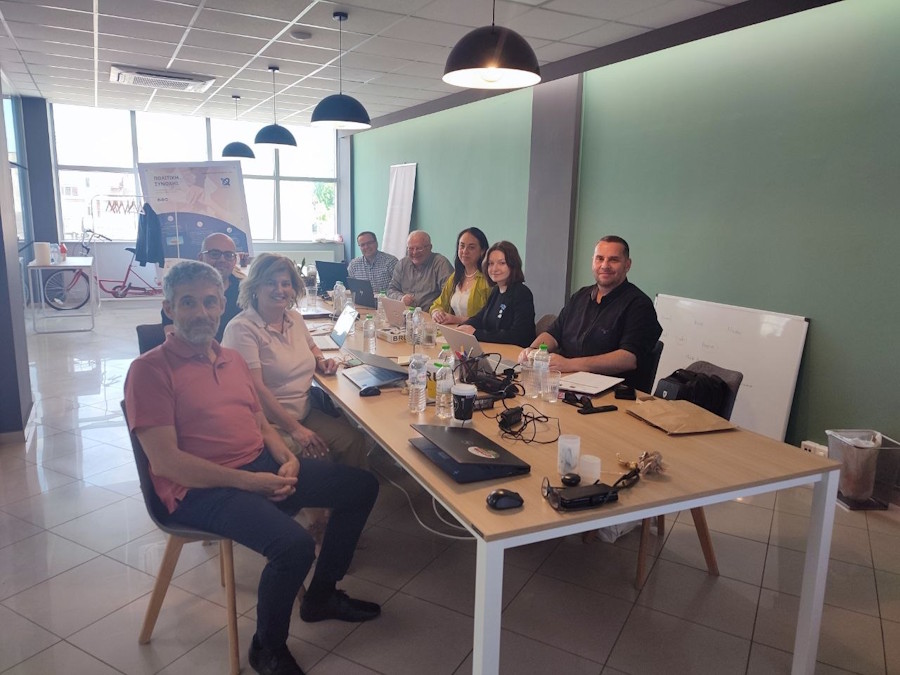

The Kick-Off Meeting (KOM) of the AIOS Project Successfully Held
16/07/2026Introducing AIOS: AI-Driven Open Science – a new Erasmus+ curriculum By Paolo Ciancarini, Marcello Missiroli, Giancarlo Succi (Unibo)
19/10/2026Artificial Intelligence is rapidly changing how research is conducted, analysed and communicated. At the same time, Open Science is reshaping how scientific knowledge, data and research outputs are created, shared and reused. Bringing these developments together creates significant opportunities, but also raises important challenges for universities, researchers and research-driven organisations.
AIOS, AI-Driven Open Science: A Curriculum for Research and Innovation, is an Erasmus+ Cooperation Partnership in Higher Education that responds to this emerging landscape by developing the knowledge, skills and educational resources needed to use Artificial Intelligence effectively and responsibly within Open Science.
The 24-month project runs from March 2026 to March 2028 and is co funded by the European Union through the Erasmus+ Programme.
Connecting Artificial Intelligence and Open Science
Open Science seeks to make scientific knowledge more accessible, transparent, reusable and collaborative. It encompasses practices such as open-access publishing, research data management, Open Educational Resources, reproducible research and greater engagement between research communities and society.
Artificial Intelligence can strengthen many of these practices. AI-supported tools can assist researchers with knowledge discovery, literature analysis, data curation, metadata generation, data analysis and the management of increasingly complex scientific information.
At the same time, their use raises important questions. How can transparency and responsible use be ensured? How should privacy and sensitive information be protected? How can bias in AI systems be identified and mitigated? How should researchers assess the reliability of AI-supported outputs, and who remains accountable for the decisions made with these technologies?
AIOS addresses this relationship from two complementary perspectives. "Open AI for Everyone" promotes the accessible, explainable and ethical use of AI, while "AI for Open Science" explores how AI can support open data analysis, research workflows, knowledge discovery and scientific collaboration.
The project therefore goes beyond teaching people how to use individual AI tools. Its broader objective is to build the competences required to integrate AI into Open Science practices in a responsible, systematic and sustainable way.
Towards the Open Science Officer
Technology and infrastructure alone are not enough to implement Open Science successfully. Institutions also need people who understand open-access policies, FAIR data principles, research data management, AI-supported research workflows, ethical and legal requirements, institutional strategy and the practical challenges researchers encounter in their everyday work.
A central element of AIOS is therefore the development of the Open Science Officer (OSO) role.
AIOS will develop a dedicated curriculum to support this interdisciplinary competence profile and prepare an initial cohort of AIOS Open Science Officers. These professionals will be equipped to support researchers, connect institutional policies with everyday research practices, promote responsible uses of AI and contribute to a stronger Open Science culture within their organisations, whether in academic, research or business environments.
A curriculum designed for emerging needs
The AIOS curriculum and training resources will address five broad areas of competence:
- Open Science foundations - Open Science principles, open access, open data, FAIR, research-data management, reproducibility, basic open-data analysis.
- Open Science resources and data workflows - repositories, OER, metadata, persistent identifiers, storage, preservation, versioning, data preparation, documentation, quality assessment.
- Management and implementation - institutional readiness, stakeholder coordination, support services, project planning, sustainability, incentives, monitoring, community engagement.
- Legal, ethical and responsible practice - responsible openness, research ethics, privacy, data protection, licensing, access decisions, risk mitigation, accountability, expert escalation.
- Applied Open Science in educational contexts - educational use of OS resources, OER design/adaptation, open pedagogy, institutional case analysis, accessibility, communication, training.
The consortium will develop 10 new core training modules, complemented by 10 Open Educational Resource modules adapted from the partners' existing educational portfolios. Together, these will form the AIOS Training Kit.
All 20 modules will be made available in five languages, English, Greek, Norwegian, Italian and Ukrainian, helping make the project's educational resources accessible to a wider European and international audience.
Learning will not need to follow a single pathway. Alongside the complete curriculum, AIOS is developing a self-assessment tool and a tool for designing personalised learning journeys. These will allow learners to assess their existing competences and follow training that corresponds to their individual needs. Participants may complete the full curriculum, follow personalised pathways based on selected modules, or use individual modules within existing educational and training programmes.
A five-day Train-the-Trainer programme will also prepare partner staff to deliver the AIOS curriculum effectively. The curriculum and educational resources will subsequently be validated through pilot training and assessment, with feedback from learners, trainers and experts contributing to their further refinement.
From universities to research and industry
Although higher education is at the centre of AIOS, the relevance of Open Science and AI competences extends well beyond universities. Research centres, high-technology companies and other research-driven organisations are also increasingly required to manage data responsibly, collaborate openly and understand the opportunities and limitations of AI-supported research.
AIOS therefore aims to strengthen connections between academia, research and industry, while engaging researchers, educators, university leaders, students, policymakers, professionals, citizen-science communities and the wider public.
By bringing together educational, research and industry perspectives, the project aims to contribute to a more open, collaborative and responsible research ecosystem in which AI can support knowledge sharing, research quality, reproducibility and wider access to scientific results.
A European partnership
AIOS brings together five organisations from four countries, combining complementary expertise in higher education, Artificial Intelligence, Open Science, digital learning, software engineering and industry engagement.
The partnership comprises the University of Thessaly, which coordinates the project, the Hellenic Open University, Alma Mater Studiorum - Università di Bologna, the Norwegian University of Science and Technology (NTNU) and the Kharkiv IT Cluster, which contributes a strong industry and innovation ecosystem perspective.
Together, the partners will develop, test and disseminate the project's tools and educational resources through curriculum development, training activities, pilot implementation, stakeholder engagement and multiplier events, with the aim of creating results that can be used well beyond the participating institutions.
Building a more open and AI-ready research ecosystem
Ultimately, AIOS aims to help universities, researchers and research-driven organisations move from awareness of Open Science and Artificial Intelligence towards their practical and responsible implementation.
By combining curriculum development, competence assessment, personalised learning journeys, Open Educational Resources, pilot training and stakeholder engagement, AIOS seeks to create tools and resources that remain useful beyond the formal lifetime of the project.
Over the coming months, the AIOS website will share project developments, educational resources, events and opportunities to participate in the initiative.
Follow AIOS as we explore how Artificial Intelligence can help make science more open, collaborative, responsible and accessible.