AI-Driven Open Science: A Curriculum for Research and Innovation
The Erasmus+ project AIOS – AI-Driven Open Science: A Curriculum for Research and Innovation aims to support higher education institutions, researchers, educators, and innovation ecosystems across Europe in adopting Artificial Intelligence (AI)-enhanced Open Science practices.
The project promotes a more transparent, collaborative, and accessible research culture by integrating AI-driven approaches into Open Science workflows, open access publishing, data management, and knowledge sharing.
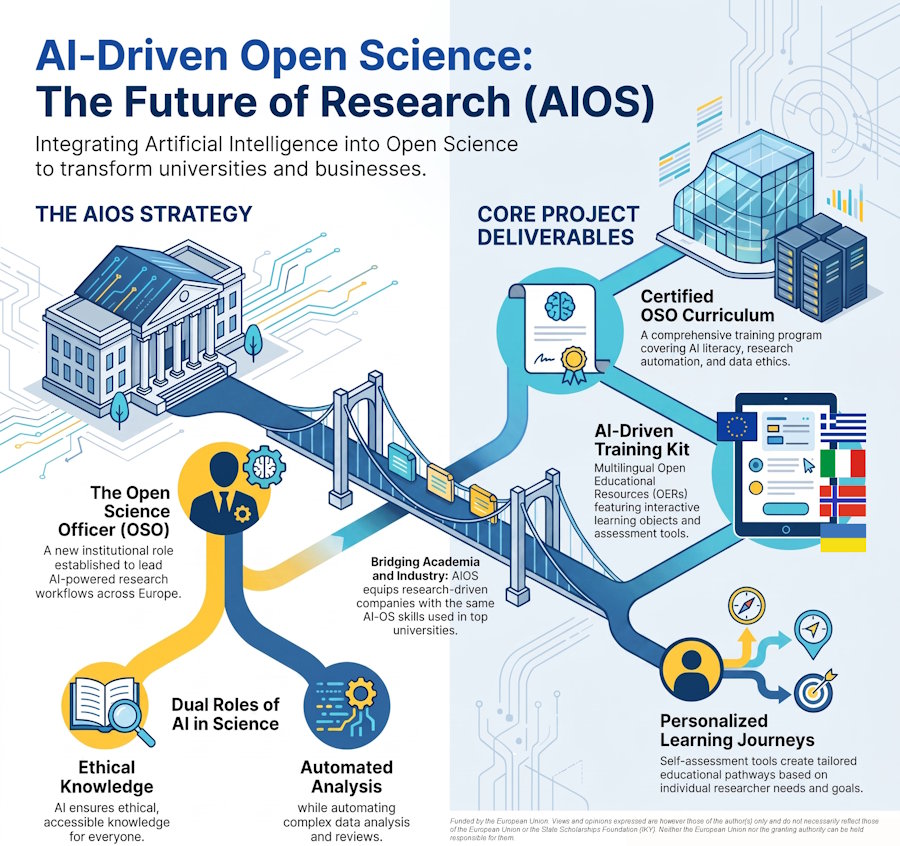
A central objective of AIOS is the establishment of the Open Science Officer (OSO) role — a new professional profile designed to support universities and organisations in implementing ethical, inclusive, and AI-enabled research practices.
The Open Science Officer (OSO) is emerging as a key professional profile supporting the implementation of Open Science principles within universities, research institutions and innovation ecosystems. Through the development of a competence framework, curriculum and supporting tools, AIOS contributes to defining and promoting this new role across Europe.
The project ultimately aims to strengthen digital and research competences, foster interdisciplinary collaboration, and contribute to a more interconnected European Research and Higher Education Area.
Despite the growing adoption of Artificial Intelligence and Open Science practices, many higher education institutions and research organisations still face challenges related to skills development, research data management, ethical AI use, and the effective integration of digital technologies into research workflows. AIOS addresses these challenges by creating a structured educational framework that supports capacity building, digital transformation and sustainable innovation.
This is achieved through five main action lines:
Establish the Open Science Officer (OSO) framework
AIOS develops a competence framework and curriculum defining the knowledge, skills, and learning pathways required for the emerging Open Science Officer role. The framework supports higher education institutions and organisations in integrating Open Science and AI-related competences into education, training, and research environments.
Develop AI-enabled educational resources and training materials
The project creates Open Educational Resources (OERs), digital learning materials, and training modules supporting flexible, inclusive, and scalable learning opportunities in Open Science and Artificial Intelligence. The learning resources are designed for:
- researchers and academics
- higher education staff
- educators and trainers
- students and lifelong learners
- professionals working in research and innovation ecosystems
Promote AI literacy and personalised learning
AIOS develops self-assessment and personalised learning tools that help users evaluate their competences and identify learning pathways related to Open Science and AI. The project promotes the responsible and ethical use of AI technologies while supporting digital upskilling and continuous professional development.
Pilot training and certification activities
Pilot training activities will validate the AIOS curriculum and learning resources in real educational and professional contexts. The project will support the development of certification pathways for participants, contributing to the wider adoption of Open Science practices across Europe.
Strengthen collaboration and knowledge exchange
AIOS fosters collaboration between academia, industry, policymakers, and society through dissemination activities, networking actions, and knowledge-sharing initiatives. The project contributes to the wider European discussion on Artificial Intelligence, Open Science, digital transformation, and research innovation.
Through its activities and results, AIOS aims to strengthen digital and research competences, support the responsible adoption of Artificial Intelligence, promote Open Science practices, and foster collaboration between academia, industry and society. The project contributes to a more transparent, accessible and innovation-driven European Research Area.